
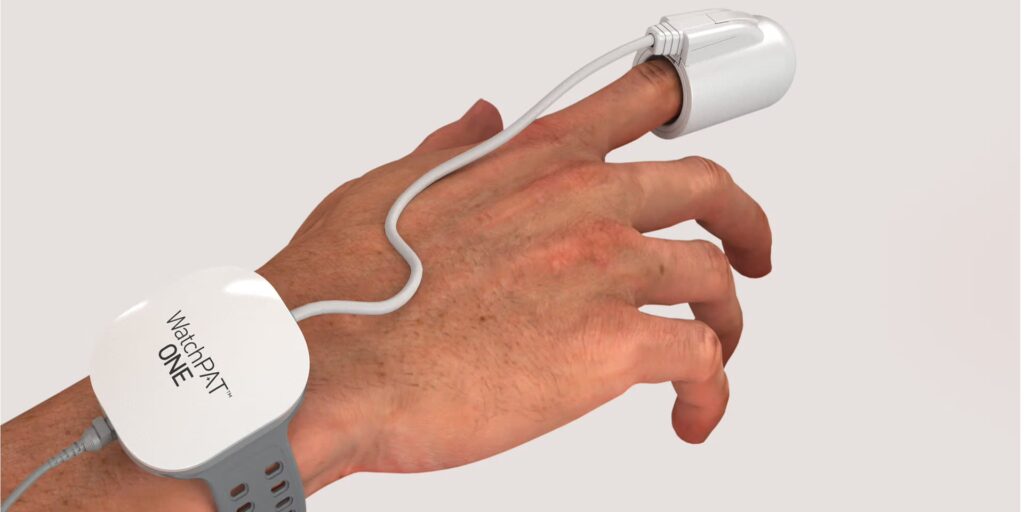
Many people believe they know how much they slept, yet memory is an unreliable recorder of the night. We remember long awakenings, forget brief disturbances, and often confuse time in bed with time asleep. Sleep diaries improve awareness, but they still depend on motivation, honesty, and perception. This is where actigraphy becomes valuable. A small clinical wearable, typically worn on the wrist, continuously tracks movement over days or weeks and uses validated methods to estimate sleep timing, duration, regularity, and fragmentation. It bridges the gap between self-reporting and laboratory sleep studies by showing how sleep behaves in ordinary life rather than in an unfamiliar testing room. For clinicians, that longer real-world picture often reveals patterns that a single-night study or diary cannot capture clearly. It also supports more accurate treatment planning, especially when symptoms have persisted for months or years without a clear explanation or practical direction.
Clinical vs. consumer: why your watch isn’t a diagnostic tool
Consumer watches and fitness bands can encourage healthier routines, but they are not the same as clinical actigraphy. Most consumer devices are built for general wellness, not medical decision-making. Their scoring systems are usually proprietary, meaning the user cannot see exactly how sleep stages or sleep quality are calculated. Algorithms may change after software updates, and results can vary between brands. A person wearing two devices at the same time may receive two different reports for the same night, which highlights the limits of convenience technology.
Clinical actigraphy uses validated processes and is interpreted by trained professionals alongside symptoms, medicines, lifestyle factors, and medical history. It does not claim to replace laboratory polysomnography when breathing disorders, seizures, or complex parasomnias are suspected. Instead, it provides dependable trend data over time. That distinction matters because treatment decisions should not rely on unverified scores or colourful graphs that appear authoritative without proven diagnostic accuracy.
Consumer data can also create a false sense of security or unnecessary anxiety. Someone with loud snoring and severe daytime sleepiness may ignore symptoms because a device reports excellent sleep. Another person may become distressed by poor scores despite feeling well. Constant checking can lead to performance anxiety around sleep, where people chase numbers rather than healthy behaviour. Useful technology should guide perspective, not dominate it.
The 14-day snapshot: mapping the circadian rhythm
A fourteen-day monitoring period often reveals more than one isolated night. Sleep is shaped by circadian timing, habits, light exposure, work demands, social schedules, exercise, and stress. Because these influences change across weekdays and weekends, short assessments can miss the real pattern. Two weeks commonly capture delayed bedtimes, variable waking hours, repeated naps, and recovery sleep after demanding days. This natural-environment monitoring is especially important for chronic conditions. People with long-term insomnia may sleep differently in a laboratory because the setting feels unfamiliar or stressful. Those with depression, chronic pain, neurological illness, or fatigue disorders may fluctuate considerably across many days. Actigraphy helps clinicians see whether disruption is constant, episodic, or linked to routines such as travel, caregiving, or irregular employment hours.
The fourteen-day record is also useful for identifying social jetlag. This occurs when sleep timing differs sharply between workdays and free days. A person may wake very early for employment, then stay up late and sleep in at weekends. Repeating that shift every week can produce tiredness, poor concentration, mood changes, and reduced productivity. Recognising the mismatch allows realistic planning rather than vague advice. Circadian mapping can also show whether a patient is sleeping enough but at the wrong time, or sleeping too little, regardless of timing. Those are different problems requiring different solutions. Without objective tracking across several days, both may appear identical because the complaint is simply tiredness. Actigraphy helps to separate quantity issues from timing issues with greater confidence.
Using data to personalise treatment
Treatment becomes more effective when timing is precise. If actigraphy shows delayed sleep onset and late waking, clinicians may recommend morning bright light exposure, stronger daytime routine cues, and gradual advancement of wake time. If the rhythm is advanced, evening light and adjusted schedules may be more suitable. Objective timing data reduces guesswork and makes recommendations more targeted. For insomnia, actigraphy can support cognitive behavioural therapy for insomnia (CBT-I). Therapists commonly use structured sleep windows, matching time in bed more closely to likely sleep time before gradually expanding opportunity as sleep efficiency improves. Trend data help to measure progress, identify setbacks, and correct overestimation or underestimation of sleep that often accompanies chronic insomnia.
The data can also uncover habits that patients may overlook. Long evening naps, inconsistent caffeine intake, alcohol near bedtime, irregular exercise timing, or dramatic weekend catch-up sleep may become visible only when patterns are reviewed across days. Because the evidence comes from ordinary life rather than memory alone, patients often understand recommendations more readily. Personalisation is particularly valuable when several factors interact at once. A shift worker with insomnia and anxiety, for example, may need schedule stabilisation, light timing changes, and behavioural treatment together. Actigraphy helps to prioritise the sequence of interventions rather than applying generic advice that may only partly address the real cause.
When is actigraphy recommended?
Actigraphy is commonly recommended when a clinician suspects a circadian rhythm sleep-wake disorder. Examples include delayed sleep phase, advanced sleep phase, irregular sleep-wake rhythm, or non-standard patterns caused by rotating shifts. It is especially useful when symptoms have lasted for months, and daily life is being affected by tiredness, lateness, or poor concentration. It can also benefit people with insomnia when diaries and symptoms do not match, when progress needs objective review, or when treatment planning requires a clear baseline. Patients describing frequent awakenings, variable sleep times, or uncertainty about how much they actually sleep may gain valuable insight from a structured monitoring period.
People with restless legs symptoms or repeated nocturnal movement may also benefit, particularly when clinicians need to understand how disruption affects total sleep across several nights. Older adults, adolescents, and people with cognitive difficulties may be suitable candidates because accurate recall of sleep timing is often challenging in these groups. Actigraphy is not the correct tool for every complaint. It does not diagnose sleep apnoea, replace neurological testing, or fully explain unusual behaviours during sleep. However, when used for the right patient profile, it provides an evidence-based view of real-world sleep patterns. If you are experiencing ongoing sleep disruption or uncertainty around your sleep patterns, you can enquire about actigraphy monitoring to gain clearer insight into your nightly rhythms and explore circadian rhythm treatment options to restore a stable, healthy sleep-wake cycle.